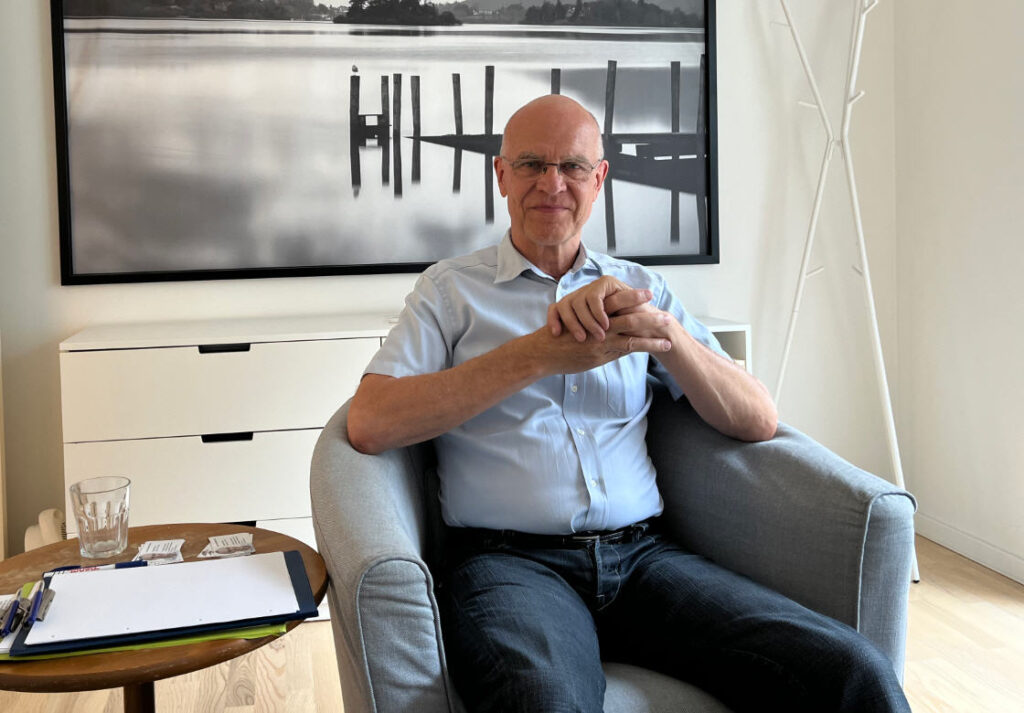
By Mikael Hoffmann, couples coach with more than 30 years of practical experience
When should a couple consider couples coaching?
Often it should be considered long before either of them is ready to say: “We have a serious problem.”
Sometimes the marriage still looks perfectly fine from the outside.
They work. They have children. They have a home. They go on holiday. They manage the practical side of life.
But something has changed.
They have stopped laughing together.
They rarely touch each other.
Small disagreements turn into long arguments.
And both of them have started thinking the same uncomfortable thought:
“Is this really how the rest of our marriage is going to be?”
Key Takeaways
- Couples experiencing recurring conflicts or growing emotional distance should consider couples counseling before the problems become more serious.
- Couples counseling is not about determining who is right or wrong, but about understanding the interaction patterns that create conflict.
- Communication can be learned and practised, and couples can improve their relationship through awareness, skills and new habits.
- There is no need to wait until a relationship is falling apart; seeking help early can prevent small problems from becoming much bigger ones.
- A clear focus on changing behaviour can lead to positive and lasting improvements in the relationship.
Click here to view the table of contents for this page
Table of Contents
- When should a couple consider couples coaching?
- A couple I remember
- The interesting part was not who was right
- The marriage was not the only problem
- So we changed the question
- Couples counseling should lead somewhere
- What happened to Anna and Peter?
- You do not have to wait until the relationship is falling apart
- What can you do today?
- Couples counseling is not about creating two perfect people
- A different kind of help
- Conclusion: Couples Counseling
A couple I remember

Let me call them Anna and Peter.
They had been together for many years and had two children.
Neither of them wanted a divorce.
That was actually one of the reasons they came to see me.
They wanted their marriage to work.
But they had reached a point where almost every disagreement became personal.
- Anna felt that Peter was emotionally absent.
- Peter felt that nothing he did was ever good enough for Anna.
- When Anna complained, Peter defended himself.
- When Peter defended himself, Anna became more frustrated.
- When Anna became more frustrated, Peter withdrew.
- And when Peter withdrew, Anna followed him around the house trying to get him to talk.
They were both trying to solve the problem.
And they were both making it worse.
The interesting part was not who was right
Anna had perfectly good reasons for feeling neglected.
Peter also had perfectly good reasons for feeling criticised.
If I had simply listened to each of them separately, I could have written a convincing argument for both sides.
But that would not have solved their marriage.
The important question was not:
“Who is right?”
The important question was:
“What happens between you when something goes wrong?”
That changed the conversation.
Instead of analysing every individual disagreement, we started looking at the pattern.
Anna pursued.
Peter withdrew.
Anna interpreted the withdrawal as lack of love.
Peter interpreted her pursuit as criticism.
And around they went.
The marriage was not the only problem
There was another problem underneath all this.
Neither of them was taking sufficient responsibility for their own contribution to the situation.
Anna was waiting for Peter to change before she would feel safe enough to change.
Peter was waiting for Anna to stop criticising before he would open up.
In other words:
“I will change when you change.”
That is a very difficult position from which to repair a relationship.
Because it gives both people a reason to do nothing.
So we changed the question
I asked each of them a much simpler question:
“What can you do differently, even if your partner does not change first?”
That is not always an easy question to answer.
It removes the comfortable position of being the innocent one.
It also creates possibilities.
Anna could stop pursuing Peter when he needed a pause.
Peter could learn to come back and finish the conversation instead of disappearing into silence.
Neither of them had to approve of the other’s behaviour.
They simply had to take responsibility for their own.
Couples counseling should lead somewhere
This is an important part of how I work.
I do not believe that couples should simply keep talking about the same problem week after week.
Talking can create insight.
Insight can be useful.
But insight does not automatically create a new habit.
If you want a different relationship, eventually you have to do something differently.
That is why my work with couples is structured around three things:
Awareness → skills → new habits.
First, we need to understand what is actually happening.
Then you need to learn better ways of communicating and dealing with conflict.
Finally, you need to practise those new ways until they become part of everyday life.
This approach is consistent with my broader view of couples coaching: communication is something that can be learnt and practised, rather than simply something a couple either has or does not have.
What happened to Anna and Peter?
They did not suddenly stop disagreeing.
That was never the goal.
Instead, something more useful happened.
- Their disagreements gradually stopped turning into the same destructive cycle.
- Anna became better at saying what she needed without pursuing or attacking.
- Peter became better at staying present instead of shutting down.
- They started recognising the pattern while it was happening.
- And once you can recognise a pattern, you have a much better chance of changing it.
Their marriage did not become perfect.
It became more manageable.
More respectful.
And, importantly, more enjoyable.
You do not have to wait until the relationship is falling apart
Many couples make the mistake of waiting.
They tell themselves:
“We should be able to sort this out ourselves.”
“We just need more time.”
“It will probably get better.”
Sometimes it does.
Often, however, the same habits simply become more established.
A relationship is made up of repeated behaviour.
If the same behaviour produces the same result, doing more of it is unlikely to produce a different relationship.
Sometimes the most sensible thing you can do is get help before the damage becomes greater.
What can you do today?
You can start with one small exercise.
The next time you have a disagreement, resist the temptation to explain what your partner is doing wrong.
Instead, ask yourself:
What am I doing right now?
Then ask:
Is this helping us or making things worse?
Finally:
What could I do differently?
It sounds simple.
It is not always easy.
But it puts you back in contact with the one person whose behaviour you actually have some control over: yourself.
Couples counseling is not about creating two perfect people
You do not need to become perfect partners.
You need to become better at being partners.
You will still misunderstand each other.
You will still have different opinions.
You will still occasionally say the wrong thing.
The difference is whether you know what to do afterwards.
- Can you repair?
- Can you listen?
- Can you take responsibility?
- Can you stop an argument before it becomes destructive?
- Can you find your way back to each other?
- Those are practical relationship skills.
And they can be learnt.
A different kind of help
My approach to couples counseling is therefore not about keeping couples dependent on counselling.
The purpose is to help you understand your relationship, learn practical tools and gradually become better at solving your own problems.
I work systematically and directly, but also with care and respect for the fact that you are two different people with two different perspectives.
Sometimes you need help understanding each other.
Sometimes you need to learn a new communication skill.
Sometimes you need to change a habit.
And sometimes you simply need someone outside the relationship to see the pattern that you can no longer see yourselves.
That is what good couples counseling can do.
It can help you stop fighting the same fight and start dealing with the actual problem.
Perhaps your relationship does not need to end – perhaps the pattern needs to change
If you recognise yourselves in Anna and Peter, you may not need another discussion about who is right.
You may need to look at what happens between you.
That is often where the real opportunity for change begins.
If you would like to talk about your situation, you are welcome to contact me for a free, informal conversation. We can look at what is happening between you and whether my structured approach to couples coaching could be helpful.
Conclusion: Couples Counseling
FAQ
Every relationship experiences difficult periods.
Couples coaching may be helpful when the same arguments keep repeating, emotional distance is growing, or you feel stuck in patterns that you cannot resolve on your own.
Seeking help early can often prevent small problems from becoming larger ones.
Yes. Meaningful change often begins when one person starts responding differently to familiar situations.
While lasting improvement is usually easier when both partners are engaged, taking responsibility for your own behaviour can already influence the dynamics of the relationship in a positive way.
No. Effective couples coaching is less about assigning blame and more about understanding the interaction patterns that create conflict.
The goal is to help both partners develop healthier ways of communicating, handling disagreements and rebuilding connection.
Would you like to explore what is happening in your relationship?
Sometimes a relationship does not need more discussions about who is right.
It needs a clearer understanding of the patterns that keep creating distance, frustration or conflict.
If you would like professional guidance, you are welcome to contact me for a free, informal phone conversation.
Together, we can explore your situation and whether my structured and practical approach to couples coaching may be helpful for you.
If you wish, I will give you a call.
Simply fill out the form below.
Or call me at +45 – 21 79 18 50
(If, contrary to expectations, I don’t get back to you within 1–2 days, there is a chance I might not have received it, so please feel free to send me a text or give me a call.)